SPECULATIVE DESIGN
FUTURE OF

SUPPORT
Exploring how people build trust when support is shared between humans and AI.
SCROLL DOWN ↓
SPECULATIVE DESIGN
Exploring how people build trust when support is shared between humans and AI.
SCROLL DOWN ↓
Developed in partnership with Google Cloud as part of a Cornell MPS project. Due to confidentiality requirements, proprietary frameworks, research artifacts, and detailed designs have been omitted.
This case study focuses on the problem space, design process, and key learnings.
02. THE CHALLENGE
Customer support is increasingly delivered by a combination of humans and AI, raising new questions about responsibility, transparency, and user control.
How might we design support experiences that remain trustworthy when AI shares the work?

03. MY ROLE
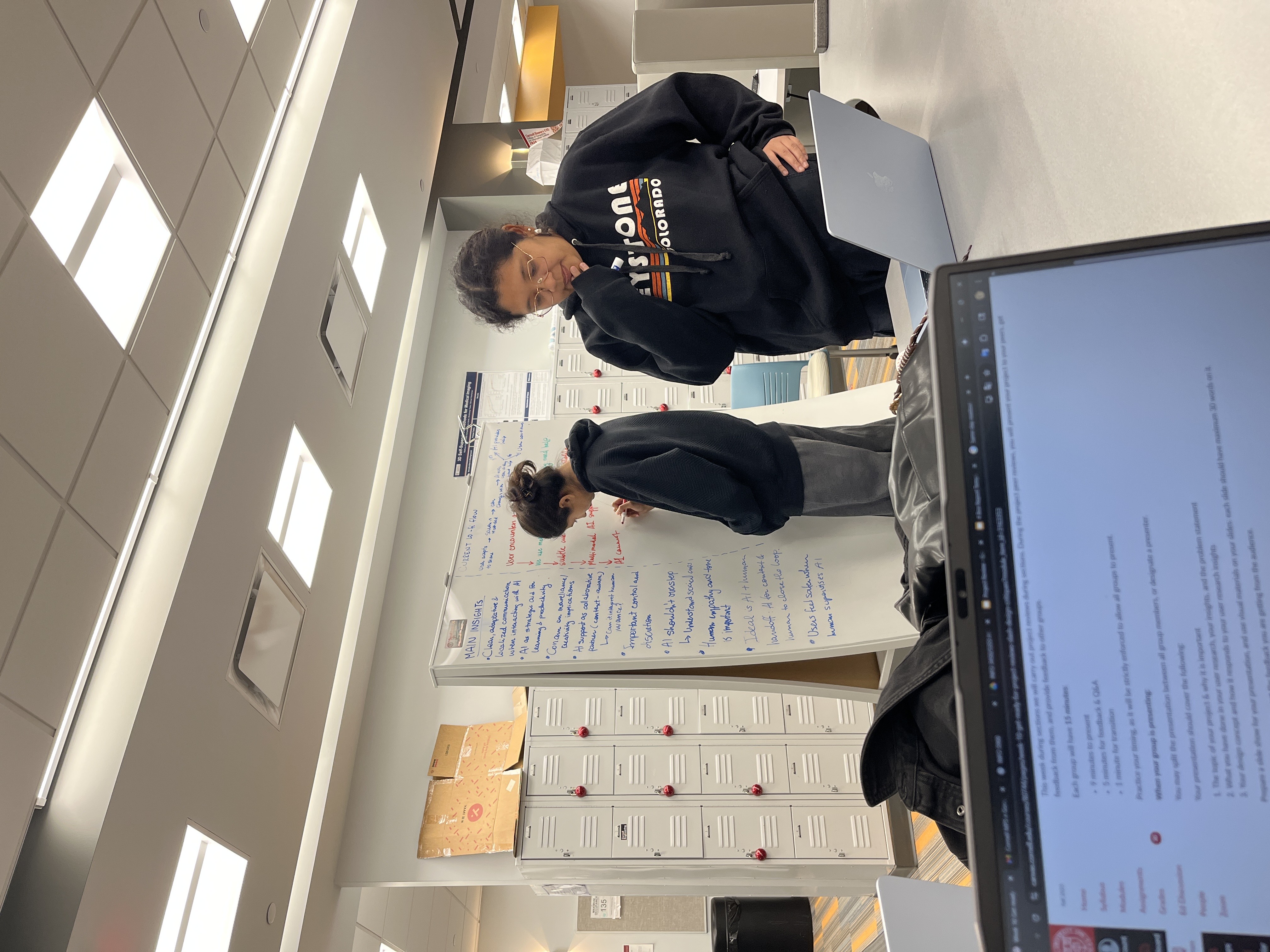
I led a multidisciplinary team through research, synthesis, and concept development. My primary contributions included planning the project, coordinating stakeholder communication with Google Cloud, conducting qualitative research, and translating findings into design principles that guided the final concepts.
TEAM: ZUHA KALEEM · NAYOUNG KIM · XUYUAN LIU · ZUNYANG CHEN · VIVIAN FENG · MARIA CHANG
04. THE CRITICAL QUESTIONS
Power Dynamics
Understanding how decisions, incentives, and control are distributed across human-AI systems.
"Who controls the data loop when AI and humans collaborate?"
Accountability Frameworks
Examining what happens when systems fail and responsibility becomes difficult to trace.
"What happens to user trust during complex failure states?"
Vulnerability Mitigation
Designing for people navigating stress, grief, urgency, or uncertainty.
"How do we protect and support users when the stakes are high?"
05. THE METHOD
Traditional UX methods evaluate existing experiences. Our challenge was different: understanding how people might respond to support systems that do not yet exist.
Rather than predicting the future, we used speculative design to create provocative support scenarios and discuss them with participants. These scenarios helped reveal expectations around trust, accountability, fairness, and the role of AI in customer support.

06. KEY FINDINGS
Across workshops, interviews, and speculative probe sessions, three recurring patterns emerged with consistent force. These findings shaped the design principles and strategic recommendations delivered to Google Cloud.
07. THE SHIFT
Working on this project shifted my focus from interface design to system design. It highlighted how decisions around data, automation, and failure states shape user outcomes, and reinforced the importance of building systems that preserve transparency and agency.